Affiliate Disclosure: Mattress Queens may earn a commission when you click links on this page.
Women experience insomnia at nearly twice the rate of men. Hormonal cycles, pregnancy, postpartum, and menopause all contribute. Here are evidence-based strategies specifically for women dealing with insomnia in 2026.
Why women insomnia is different
Hormone fluctuations (estrogen and progesterone), higher rates of anxiety disorders, mental load (often more household management responsibilities), and pregnancy/postpartum all contribute. Treatments work best when adapted to these factors.
The evidence on what actually works
Approach
What the research shows
CBT-I
First-line; improves sleep quality, effects last up to ~6 months
Sleeping pills
Work short-term, but not first-line for chronic insomnia
Who’s most affected
Women — especially around puberty, pregnancy, menopause
Most “insomnia tips” lists are generic. Here’s what’s actually backed by evidence: cognitive behavioral therapy for insomnia (CBT-I) is the recommended first-line treatment for chronic insomnia — ahead of medication — and its improvements to sleep quality have been shown to persist up to six months after treatment ends. That matters for women specifically, who carry a higher insomnia burden that spikes at puberty, pregnancy, and menopause. The core CBT-I moves you can start tonight: keep a fixed wake time, get out of bed if you’re awake more than about 20 minutes, and reserve the bed for sleep only. Not medical advice; a CBT-I program or clinician can tailor this to you.
Evidence-based insomnia strategies
1. CBT-I (Cognitive Behavioral Therapy for Insomnia)
More effective than sleep medications long-term. Multiple apps (Sleepio, Somryst) offer self-paced programs.
2. Consistent sleep and wake times
Even on weekends. Helps regulate hormonal sleep cycles.
3. Cooler bedroom temperature
65-67°F. Critical during perimenopause and luteal phase when body temperature runs warmer.
4. Limit caffeine after 2pm
Women metabolize caffeine slightly slower than men. Cutoff earlier matters more.
5. Avoid alcohol within 3 hours of bed
Alcohol suppresses REM sleep — especially impactful during perimenopause.
6. Address anxiety
Therapy, journaling, or meditation. Anxiety disorders are 2x more common in women.
7. Manage the mental load
Write down tomorrow tasks before bed. Reduces 3am wake-ups thinking about household management.
8. Consider hormone tracking
Apps like Clue or Natural Cycles help anticipate luteal-phase insomnia.
9. Magnesium supplement
200-400 mg before bed. Some research suggests benefit for women specifically.
10. See a doctor
If insomnia persists 3+ weeks, talk to your doctor. Underlying conditions (thyroid, anxiety, sleep apnea) may need treatment.
Medical disclaimer: This is not medical advice. Consult your doctor for medical conditions.
Affiliate Disclosure: Mattress Queens may earn a commission when you click links on this page.
Sleep bras provide light support without the constriction of underwire daytime bras. Some women find them essential for comfort — larger busts, post-surgery, pregnancy, breastfeeding. Others sleep braless. If you want one, here are the best sleep bras for 2026.
Quick Verdict
Best for: Women wanting light overnight support without constriction
It is personal preference. There is no medical requirement to wear or not wear a bra to bed. Some women with larger busts find light support more comfortable; others find any bra restrictive. Try both and see what helps you sleep.
Medical disclaimer: This is not medical advice. Consult your doctor for medical concerns.
Myth — sagging is genetics, pregnancy, weight change, aging
Sleeping braless damages breast shape
Myth — no evidence
A soft wireless bra aids comfort
True for many — support post-surgery, in pregnancy, or with breast pain
A tight or underwired bra at night
Can irritate skin and disrupt sleep
The big claims about sleep bras are mostly myths. Wearing one to bed does not cause breast cancer — the American Cancer Society and National Cancer Institute found no link — and it does not prevent sagging, which is driven by genetics, pregnancy, weight fluctuations, and aging, not by what you wear at night. Sleeping braless doesn’t damage breast shape either. So a sleep bra is purely about comfort: a soft, wireless, seamless style can feel supportive and reassuring, especially during pregnancy or breastfeeding, after surgery, or if you have larger breasts or nighttime breast pain. The one real caveat — skip anything tight or underwired to bed, since it can irritate skin and interrupt sleep. Not medical advice.
PREMIUM COMFORT ENHANCEMENT: Advanced memory foam technology provides responsive support and exceptional pressure point relief, instantly upgrading any new or existing mattress for a luxurious sleep experience.
COOLING GEL TECHNOLOGY: Specially formulated temperature-regulating gel infused throughout the memory foam helps regulate body temperature and dissipate heat, ensuring a cool, comfortable night’s sleep.
PREMIUM CERTIFIED QUALITY: Proudly made in the USA with imported materials, featuring CertiPUR-US certified foam that meets rigorous standards for content, emissions, and durability.
COOLING GEL PILLOW WITH DUAL TEMPERATURE CONTROL: Gel-infused memory foam plus precision ventilation holes continuously pull heat away from your body, so this cooling pillow stays more comfortable all night than traditional foam bed pillows for sleeping.
MEMORY FOAM SUPPORT FOR SIDE, BACK & STOMACH SLEEPERS: Medium-firm memory foam contours to your head, neck, and shoulders to relieve pressure points and support spinal alignment; ideal for side sleeper pillows, back sleepers, and stomach sleepers.
MACHINE WASHABLE COVER – EASY BEDROOM ESSENTIAL: Soft zippered polyester cover is easy to remove and fully machine washable and dryer safe; it’s a supportive, washable pillow that keeps your bedroom fresh without extra effort.
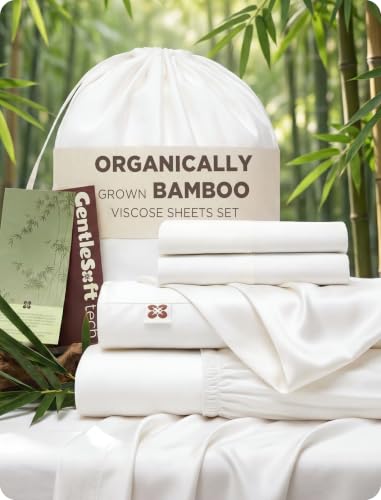
Award-Winning Comfort: Featured in Forbes Vetted and recognized by the Sleep Foundation,the 2026 MUSE Design Awards and the 2026 French Design Awards, this thoughtfully designed sheet set blends elevated aesthetics with everyday comfort for a refined bedroom experience
Cool, Moisture-wicking Fabric: These cooling sheets queen size sets are more breathable and moisture-wicking than cotton to keep you cool and dry all night. Qmax 0.416 for a noticeably cool-to-touch feel, keeping you comfortably cool and preventing overheating. Cooling queen bed sheets designed for those who struggle with night sweats
Silky Soft with Luxe Drape: Crafted from 300TC sateen, these viscose derived from bamboo queen sheet sets feel soft and smooth with elegant drape, providing hotel-level comfort at home
Affiliate Disclosure: Mattress Queens may earn a commission when you click links on this page.
Women hormones cycle through the month, year, and lifetime — and every shift affects sleep. Estrogen, progesterone, and other hormones influence sleep stages, body temperature, and even pain perception. Understanding the patterns helps you adapt your sleep routine.
Hormones and your monthly cycle
Phase
Days
Sleep Impact
Menstrual
1-7
Pain, fatigue, more sleep needed
Follicular
7-14
Best sleep quality of month
Ovulation
14-16
Slight disruption, slightly warmer
Luteal
16-28
PMS, fragmented sleep, insomnia
Menstrual phase (days 1-7)
Estrogen and progesterone are low. Most women need 30-60 minutes MORE sleep than usual. Cramps disrupt sleep onset. See our cramp position guide.
Follicular phase (days 7-14)
Estrogen rising. Energy and sleep quality at their best. Good time to commit to a consistent sleep schedule.
Luteal phase (days 16-28)
Progesterone peaks then drops. PMS symptoms can include insomnia, anxiety, racing thoughts. Body temperature is slightly elevated (cooling mattresses and sheets help). Avoid alcohol — it worsens luteal sleep significantly.
Pregnancy hormones
Progesterone surges cause daytime fatigue but disrupt nighttime sleep. Position requirements change drastically. See our pregnancy mattress guide.
Perimenopause and menopause
Estrogen and progesterone decline causes hot flashes, night sweats, and insomnia. The most disruptive sleep period for most women. See our menopause mattress guide.
What can help
Track your cycle to anticipate sleep impacts. Cooling sheets and mattresses help during luteal and menopausal phases. Adjust caffeine cutoff earlier during sensitive phases. Consider seeing a doctor for hormone replacement therapy if perimenopause is severe.
Medical disclaimer: This is not medical advice. Consult your doctor for medical conditions.
Estrogen rising — usually the best sleep of the month
Luteal (16–28)
Core temp rises 0.3–0.7°C; REM drops to its monthly low
Late luteal (PMS)
Sharp progesterone drop lightens sleep; insomnia in ~30% of women
Your sleep quality isn’t constant across the month — it tracks your hormones. The follicular phase, just after your period, is usually your best sleep. The luteal phase (the second half) is the hard one: progesterone raises core body temperature by 0.3–0.7°C and REM sleep falls to its monthly low, and when progesterone drops sharply in the late-luteal days before your period, sleep lightens and insomnia hits about 30% of menstruating women. Because the luteal phase runs warm, a cooling mattress and breathable bedding matter most in that window — and tracking your cycle lets you anticipate the rough nights instead of being blindsided. Not medical advice.
Affiliate Disclosure: Mattress Queens may earn a commission when you click links on this page, at no extra cost to you. Our reviews are independent and reflect our honest assessment.
Best value alternative
Want premium comfort for less? Start with SweetNight.
Before committing to a flagship-priced bed, it’s worth a look at SweetNight — cooling memory-foam comfort and genuine support at a fraction of the price. Our value pick for most sleepers.
Women experience back pain differently than men. Wider hips create a deeper waist curve when side sleeping, which most mattresses fail to support properly. Hormonal shifts (pregnancy, menstruation, menopause) make ligaments more flexible and back-pain-prone. Here are mattresses specifically chosen for women dealing with back pain in 2026.
Quick Verdict
Best for: Women with chronic back pain needing zoned support and proper spinal alignment
Skip if: Women without specific back pain (any general mattress will do)
1. Glacier Sleep Luxury Firm — best overall for women
Glacier Sleep hand-tied lumbar zone is specifically designed to support the deeper waist curve common in female anatomy when side sleeping. The bestseller for a reason.
Certified organic latex over coils. Firm support without polyfoam off-gassing. Best for women avoiding chemicals (pregnancy or chemical sensitivities).
Back pain isn’t gender-neutral. A systematic review of nearly half a million people found women’s low-back-pain prevalence runs about 50% higher than men’s, and after menopause the gap widens further. Part of the reason is anatomy and hormones: the female pelvis is wider with a more mobile sacroiliac joint, and pregnancy’s relaxin hormone loosens pelvic ligaments — an effect that can linger for months postpartum.
What the research shows
Figure
Women’s global low-back-pain prevalence vs men
~50% higher
Postmenopausal women vs age-matched men
~1.86× the prevalence
New mothers who get postpartum back pain
50–70%
How long relaxin can loosen pelvic ligaments after birth
Up to ~5 months (longer while breastfeeding)
Firmness that outperforms for non-specific back pain
Medium-firm — not firm
Here’s the counterintuitive part that matters most when you’re shopping. Many women reach for an extra-firm mattress assuming “firm = supportive.” But the landmark Lancet trial on non-specific low back pain found people on medium-firm surfaces were about twice as likely to report improvement as those on firm ones — and follow-up studies have echoed it. The mechanism is about alignment: a wider female pelvis needs the mattress to let the hips sink just enough to keep the lumbar spine neutral. Too firm and your hips get propped up, arching your lower back; too soft and they sink, sagging it. Medium-firm is the sweet spot for most women — and if you’re a side sleeper, add a pillow between your knees to keep the pelvis level.
Prevalence figures from peer-reviewed systematic reviews and WHO; firmness finding from the Kovacs et al. randomized trial (The Lancet). Verified July 2026. This is general information, not medical advice — see a clinician for persistent pain.
Why women back pain differs
Wider hips create a more pronounced lateral spinal curve when side sleeping. Most mattresses do not provide enough hip drop, forcing the spine into a banana shape. Pregnancy and hormonal changes also loosen ligaments, making women more susceptible to back pain.
What women back-pain sleepers need
Zoned lumbar support: Targeted firmness where you need it.
Adequate hip sinkage: Critical for side sleepers with wider hips.
Medium-firm (6-7) for most: Avoid too-soft or too-firm extremes.
Quality coils or latex: Maintains support over years.
Medical disclaimer: This is not medical advice. Consult your doctor for medical conditions.
FAQ
Should a back-pain mattress be firm or soft?
Medium-firm (6-7) is the sweet spot for most women. Too soft and the spine sags; too firm and pressure points form.
PREMIUM COMFORT ENHANCEMENT: Advanced memory foam technology provides responsive support and exceptional pressure point relief, instantly upgrading any new or existing mattress for a luxurious sleep experience.
COOLING GEL TECHNOLOGY: Specially formulated temperature-regulating gel infused throughout the memory foam helps regulate body temperature and dissipate heat, ensuring a cool, comfortable night’s sleep.
PREMIUM CERTIFIED QUALITY: Proudly made in the USA with imported materials, featuring CertiPUR-US certified foam that meets rigorous standards for content, emissions, and durability.
COOLING GEL PILLOW WITH DUAL TEMPERATURE CONTROL: Gel-infused memory foam plus precision ventilation holes continuously pull heat away from your body, so this cooling pillow stays more comfortable all night than traditional foam bed pillows for sleeping.
MEMORY FOAM SUPPORT FOR SIDE, BACK & STOMACH SLEEPERS: Medium-firm memory foam contours to your head, neck, and shoulders to relieve pressure points and support spinal alignment; ideal for side sleeper pillows, back sleepers, and stomach sleepers.
MACHINE WASHABLE COVER – EASY BEDROOM ESSENTIAL: Soft zippered polyester cover is easy to remove and fully machine washable and dryer safe; it’s a supportive, washable pillow that keeps your bedroom fresh without extra effort.
Award-Winning Comfort: Featured in Forbes Vetted and recognized by the Sleep Foundation,the 2026 MUSE Design Awards and the 2026 French Design Awards, this thoughtfully designed sheet set blends elevated aesthetics with everyday comfort for a refined bedroom experience
Cool, Moisture-wicking Fabric: These cooling sheets queen size sets are more breathable and moisture-wicking than cotton to keep you cool and dry all night. Qmax 0.416 for a noticeably cool-to-touch feel, keeping you comfortably cool and preventing overheating. Cooling queen bed sheets designed for those who struggle with night sweats
Silky Soft with Luxe Drape: Crafted from 300TC sateen, these viscose derived from bamboo queen sheet sets feel soft and smooth with elegant drape, providing hotel-level comfort at home
Affiliate Disclosure: Mattress Queens may earn a commission when you click links on this page, at no extra cost to you.
Best value alternative
Want premium comfort for less? Start with SweetNight.
Before committing to a flagship-priced bed, it’s worth a look at SweetNight — cooling memory-foam comfort and genuine support at a fraction of the price. Our value pick for most sleepers.
Plus-size women (230+ lbs) need mattresses engineered specifically for higher body weight. Standard hybrid coils compress too easily; all-foam mattresses develop body impressions faster. The right mattress uses reinforced coils, denser foam, and provides edge support. Here are our top picks for 2026.
Quick Verdict
Best for: Plus-size women (230+ lbs) needing durable support and edge stability
Skip if: Average-weight sleepers (these picks may feel too firm)
2. Glacier Sleep HD — Glacier Sleep for heavy-duty
Glacier Sleep HD is engineered for sleepers up to 500 lbs per side. Reinforced coil-on-coil construction. Same Glacier Sleep quality as Classic plus more support.
At 230+ lbs the usual review advice breaks down: a mattress that scores well for an average-weight sleeper can bottom out, sag, and lose edge support within a year or two under more weight. The fix is to shop by construction specs, not just feel — here’s what to hold out for.
What to look for
Target
Support core
Hybrid with pocketed coils (or high-density foam, 2.0+ PCF)
Coil gauge (lower = thicker/stronger)
~12–13 under the body; 13–14 at the edge
Total thickness
At least 12″ (13″+ is better)
Firmness
Medium-firm (6–7/10) — it reads softer under higher weight
Edge support
Reinforced perimeter coils
Durability red flag
Low-density foam (<2.0 PCF) impressions in 1–2 years
Two things matter most and get overlooked. First, read a size firmer than you think: your body weight compresses foam and coils further, so a “medium” often feels plush-to-soft at 230+ — medium-firm lands where a lighter person feels medium. Second, edge support is not optional: reinforced perimeter coils are what let you sit on the side to dress or get in and out without the edge collapsing, and they’re the first thing to fail on an underbuilt mattress. Prioritize coil gauge and edge reinforcement over how plush the top feels in a showroom — the plushness you’ll get from the comfort layer, but the support has to come from the core.
Construction guidance per current heavy-sleeper testing standards. Verified July 2026.
What plus-size women need
Reinforced coils: Heavier gauge to prevent sagging.
Strong edge support: Critical for getting in and out of bed.
Dense base foam: Prevents body impressions over time.
Cooler sleep: Higher body weight often correlates with hotter sleep.
Medical disclaimer: This is not medical advice. Consult your doctor for medical conditions.
PREMIUM COMFORT ENHANCEMENT: Advanced memory foam technology provides responsive support and exceptional pressure point relief, instantly upgrading any new or existing mattress for a luxurious sleep experience.
COOLING GEL TECHNOLOGY: Specially formulated temperature-regulating gel infused throughout the memory foam helps regulate body temperature and dissipate heat, ensuring a cool, comfortable night’s sleep.
PREMIUM CERTIFIED QUALITY: Proudly made in the USA with imported materials, featuring CertiPUR-US certified foam that meets rigorous standards for content, emissions, and durability.
COOLING GEL PILLOW WITH DUAL TEMPERATURE CONTROL: Gel-infused memory foam plus precision ventilation holes continuously pull heat away from your body, so this cooling pillow stays more comfortable all night than traditional foam bed pillows for sleeping.
MEMORY FOAM SUPPORT FOR SIDE, BACK & STOMACH SLEEPERS: Medium-firm memory foam contours to your head, neck, and shoulders to relieve pressure points and support spinal alignment; ideal for side sleeper pillows, back sleepers, and stomach sleepers.
MACHINE WASHABLE COVER – EASY BEDROOM ESSENTIAL: Soft zippered polyester cover is easy to remove and fully machine washable and dryer safe; it’s a supportive, washable pillow that keeps your bedroom fresh without extra effort.
Award-Winning Comfort: Featured in Forbes Vetted and recognized by the Sleep Foundation,the 2026 MUSE Design Awards and the 2026 French Design Awards, this thoughtfully designed sheet set blends elevated aesthetics with everyday comfort for a refined bedroom experience
Cool, Moisture-wicking Fabric: These cooling sheets queen size sets are more breathable and moisture-wicking than cotton to keep you cool and dry all night. Qmax 0.416 for a noticeably cool-to-touch feel, keeping you comfortably cool and preventing overheating. Cooling queen bed sheets designed for those who struggle with night sweats
Silky Soft with Luxe Drape: Crafted from 300TC sateen, these viscose derived from bamboo queen sheet sets feel soft and smooth with elegant drape, providing hotel-level comfort at home
Affiliate Disclosure: Mattress Queens may earn a commission when you click links on this page.
Menstrual cramps make it hard to sleep, but the right position can reduce pain significantly. Here are the sleep positions OBGYNs recommend for period pain, plus how to set up your mattress and pillows to support them.
Best sleep positions for cramps
Fetal position (curled on left side): The most effective position for most women. Curling reduces tension on abdominal muscles. Sleeping on the left side improves circulation and digestion.
Child pose adaptation (in bed): Lay on stomach with knees tucked under, hips elevated. Reduces back pain from cramping.
Back sleeping with knees elevated: Use a pillow under knees to relax abdominal muscles. Good for women with back pain plus cramps.
Why sleep position matters when you’re cramping
Period pain is nearly universal — studies put dysmenorrhea at roughly three in four young women, with over 40% experiencing it every single cycle. So this is worth getting right, and position genuinely helps because of muscle mechanics.
What the research shows
Detail
Young women who get period pain
~3 in 4 (studies range 16–91%)
Report pain with every period
~43%
Most-recommended position
Fetal — side, knees toward chest
If back cramps dominate
Back-sleeping, or side + pillow between knees
The fetal position relaxes the abdominal muscles and takes tension off the cramping uterus, which is why it’s the go-to. If your cramps radiate into your lower back instead, flat back-sleeping (even weight distribution, no twisting) or side-lying with a pillow between the knees can work better. Add heat — a heating pad or hot water bottle on the abdomen relaxes the muscle further. General information, not medical advice; see a doctor for severe or worsening pain.
Positions to avoid
Flat stomach sleeping: Increases pelvic pressure and worsens cramping.
Tightly twisted positions: Restrict blood flow to the abdomen.
Position
Benefit
Mattress Need
Fetal (left side)
Reduces muscle tension
Soft for shoulder/hip relief
Back with knees up
Relaxes abdomen
Medium-firm support
Modified child pose
Reduces back pain
Soft surface
Set up your bed for period sleep
Soft-to-medium mattress (3-6 firmness). Pillow between knees for side sleeping. Heating pad on lower abdomen. Cooling sheets if hot flashes accompany cramps.
Other tips for cramp-related sleep
Ibuprofen or naproxen before bed (per doctor guidance). Heating pad on lower belly. Magnesium supplement (some research suggests benefit). Chamomile tea. Cool, dark room.
Medical disclaimer: This is not medical advice. Consult your doctor for medical conditions.
Affiliate Disclosure: Mattress Queens may earn a commission when you click links on this page, at no extra cost to you.
Women experience neck pain differently. Narrower shoulders mean different pillow loft requirements. Hormonal changes affect ligament flexibility. Here are pillows specifically chosen for women.
Neck pain from a pillow is almost always a loft mismatch. The goal is a neutral neck — head neither tipped up toward the ceiling nor dropping toward the mattress, spine straight from head to hips.
Sleep position
Ideal loft
Side
High, ~5–7″ (bridge the shoulder gap)
Back
Medium, ~3–5″ (support the neck curve, don’t push the head forward)
Stomach
Very low / soft — or none (avoid craning the neck up)
Combination
Adjustable shredded-fill (tune it per position)
Side sleepers need the most height to fill the gap between shoulder and ear — and here a women-specific note matters: narrower shoulders usually land at the lower end (~5–6″), broader shoulders nearer 7″. Back sleepers need less; stomach sleepers least of all (a too-tall pillow forces the neck back all night). If you switch positions as you sleep, an adjustable shredded-fill pillow lets you add or remove fill instead of guessing. General information, not medical advice.
How to pick the right loft
Side sleepers: 4-6 inches. Back sleepers: 3-4 inches.
Medical disclaimer: This is not medical advice. Consult your doctor for medical conditions.
Affiliate Disclosure: Mattress Queens may earn a commission when you click links on this page.
The right bed frame supports your mattress, complements your bedroom design, and lasts years. Women shoppers often want a balance of aesthetics, sturdy construction, and quiet operation (no squeaky frames). Here are our top picks for 2026.
Quick Verdict
Best for: Women wanting an aesthetic, sturdy frame that pairs with their mattress
Skip if: Renters needing a portable, easily moved frame
The one spec that protects your mattress warranty: slat spacing
A beautiful bed frame can quietly void your mattress warranty — and almost nobody checks for it. Nearly every foam and hybrid mattress warranty requires slats no more than a set distance apart; go wider and the mattress sags into the gaps, which is exactly the damage warranties exclude.
What to check
The rule
Max slat gap (foam / hybrid)
≤3″ (some brands 2.5″)
Best base type
Platform — built-in support, no box spring needed
Box spring
Often unnecessary or forbidden for foam/hybrid — can void warranty
Center support
Queen and larger need center legs or a support bar
Modern foam, latex, and hybrid mattresses are self-supporting, so a platform frame with slats no more than ~3″ apart (or a solid base) is ideal — and a box spring is usually the wrong choice, sometimes explicitly forbidden. For queen and larger, confirm the frame includes center support legs, or the middle will sag under two people over time. The simple move: read your mattress’s foundation requirement before you buy the frame, not after a warranty claim gets denied.
What women should look for in a bed frame
Quiet operation: No squeaks during partner movement.
Sturdy base: Center support prevents sagging.
Easy assembly: Most women want under 30 min setup time.
Style match: Bedrooms are personal spaces. Aesthetics matter.
Affiliate Disclosure: Mattress Queens may earn a commission when you click links on this page, at no extra cost to you.
Organic mattresses use certified-organic materials (GOTS cotton, GOLS latex, organic wool) without polyurethane foam or chemical flame retardants. For women avoiding endocrine disruptors, planning pregnancy, or with chemical sensitivities, organic certifications matter. Here are our top picks.
Quick Verdict
Best for: Women seeking chemical-free sleep environments
Organic vs. low-emission: what the certifications actually verify
🌿 Organic & natural pick: The Ultimate Snooze — a natural latex, organic cotton & wool mattress with zero fiberglass and no synthetic foams, on sale now with free US shipping. See the Ultimate Snooze sale →
“Certified” gets thrown around loosely in this category, and it hides a real distinction: is the mattress organic, and is it low-emission are two different questions answered by different seals. Here’s what each one actually proves.
Certification
What it verifies
GOTS (Global Organic Textile Standard)
Organic fabric/fibers; bans polyurethane foam & chemical flame retardants
GOLS (Global Organic Latex Standard)
Latex is genuinely organic (organic rubber-tree sap)
GREENGUARD Gold
Low chemical (VOC) emissions — what the mattress releases into your air
CertiPUR-US
Baseline safety of any polyurethane foam present — not organic; industry-run
MADE SAFE
Free of a broad list of hazardous chemicals
The trap: GREENGUARD Gold and CertiPUR-US certify chemical/emissions safety, not organic content — so even a fully synthetic mattress can carry them, and CertiPUR-US is administered by the foam industry itself rather than an independent third party. For a genuinely organic bed, look for GOTS + GOLS together; for verified low off-gassing near your face all night, add GREENGUARD Gold. That combination is the real signal — not any single logo on the marketing page.
Why organic matters more for women
Women bodies retain more environmental toxins in fat tissue. During pregnancy and breastfeeding, chemical exposure has greater impact.
Medical disclaimer: This is not medical advice. Consult your doctor for medical conditions.
Affiliate Disclosure: Mattress Queens may earn a commission when you click links on this page, at no extra cost to you.
Adjustable beds elevate the head, feet, or both. For women: relief from acid reflux during pregnancy, lower back pain reduction, swelling reduction, easier reading.
Quick Verdict
Best for: Women with back pain, acid reflux, sleep apnea, or pregnancy discomfort
Adjustable base pick: SweetNight’s SenseSync Adjustable Bed Base adds head and foot incline, a wireless remote, and zero-gravity presets, and it pairs with most mattresses — a strong-value upgrade to watch this Black Friday.
The adjustable base we recommend
Amazon Basics Adjustable Bed Base (Queen)
Head-and-foot incline, wireless remote, and a whisper-quiet motor — the most reliable budget base we track. Around $399 and in stock.
The health benefits — and what the evidence actually shows
Adjustable bases aren’t just a luxury; for a few common issues the incline does real work. Here’s what the research supports — and one honest limit.
Benefit
What the evidence shows
Acid reflux / GERD
Elevating the upper body reduces reflux symptoms
Zero-gravity position
Torso ~120°, knees above heart — even pressure, less cardiovascular strain
Snoring (12° incline study)
~7% less snoring, ~4% fewer awakenings, ~5% more deep sleep
Circulation
Gentle elevation helps blood return to the heart
For women specifically, an adjustable base earns its keep across life stages: pregnancy (incline eases heartburn and swelling), menopause (circulation and reflux), and any season when snoring or acid reflux is disrupting sleep. The one honest caveat: an incline modestly reduces ordinary snoring, but it is not a treatment for moderate-to-severe sleep apnea. If you snore heavily, gasp awake, or never feel rested, see a doctor rather than relying on a bed angle. General information, not medical advice.
Health benefits for women
Acid reflux/GERD: Elevated head reduces reflux.
Lower back pain: Knee elevation reduces lumbar pressure.
Leg swelling: Foot elevation helps circulation.
Sleep apnea/snoring: Head elevation reduces airway obstruction.
Medical disclaimer: This is not medical advice. Consult your doctor for medical conditions.